A railway project that covers more than 120 bridges and viaducts in the challenging geography of the Himalayas.
Overview
Project Summary
120+ bridges & viaducts
Services
Location
Period
Employer/Client
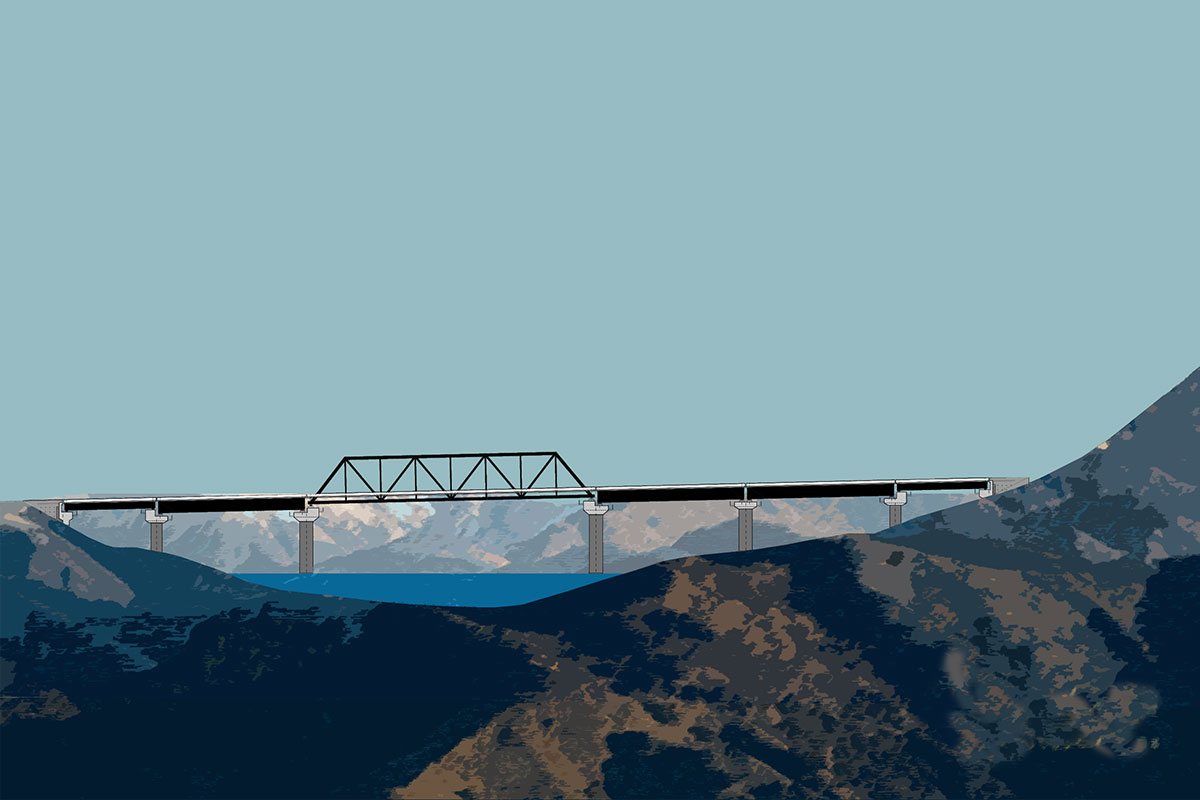
The Bilaspur-Manali-Leh railway that was initiated to provide railway connections within the Himalayan region, is of national importance and one of most strategic railway projects in India. There are more than 120 numbers of river bridges, viaducts and flyovers in the scope of new railway alignment between Bilaspur-Manali-Leh.
Steel composite girder and steel open web girder (truss) types of superstructure have been used in the projects. The span range is between 18 m to 80 m. Crane launching, Cantilever and Incrementally Launching methods have been used in the project.
Pier heights differ from 5m short piers to 70 m high piers. Open and pile types of foundations have been adopted mainly in the projects. Well type of foundation with top-down construction method is also used for piers at river bed with high depth of scouring.
Mountainous geography, steep slopes ,excessive weather conditions, high piers, wide rivers and high zone of seismicity are the main challenging factors of the project.
The Bilaspur-Manali-Leh railway that was initiated to provide railway connections within the Himalayan region, is of national importance and one of most strategic railway projects in India. There are more than 120 numbers of river bridges, viaducts and flyovers in the scope of new railway alignment between Bilaspur-Manali-Leh.
Steel composite girder and steel open web girder (truss) types of superstructure have been used in the projects. The span range is between 18 m to 80 m. Crane launching, Cantilever and Incrementally Launching methods have been used in the project.
Pier heights differ from 5m short piers to 70 m high piers. Open and pile types of foundations have been adopted mainly in the projects. Well type of foundation with top-down construction method is also used for piers at river bed with high depth of scouring.
Mountainous geography, steep slopes ,excessive weather conditions, high piers, wide rivers and high zone of seismicity are the main challenging factors of the project.